Pilot · Shadow mode
Two weeks. Your servers. Your data. Zero actions taken.
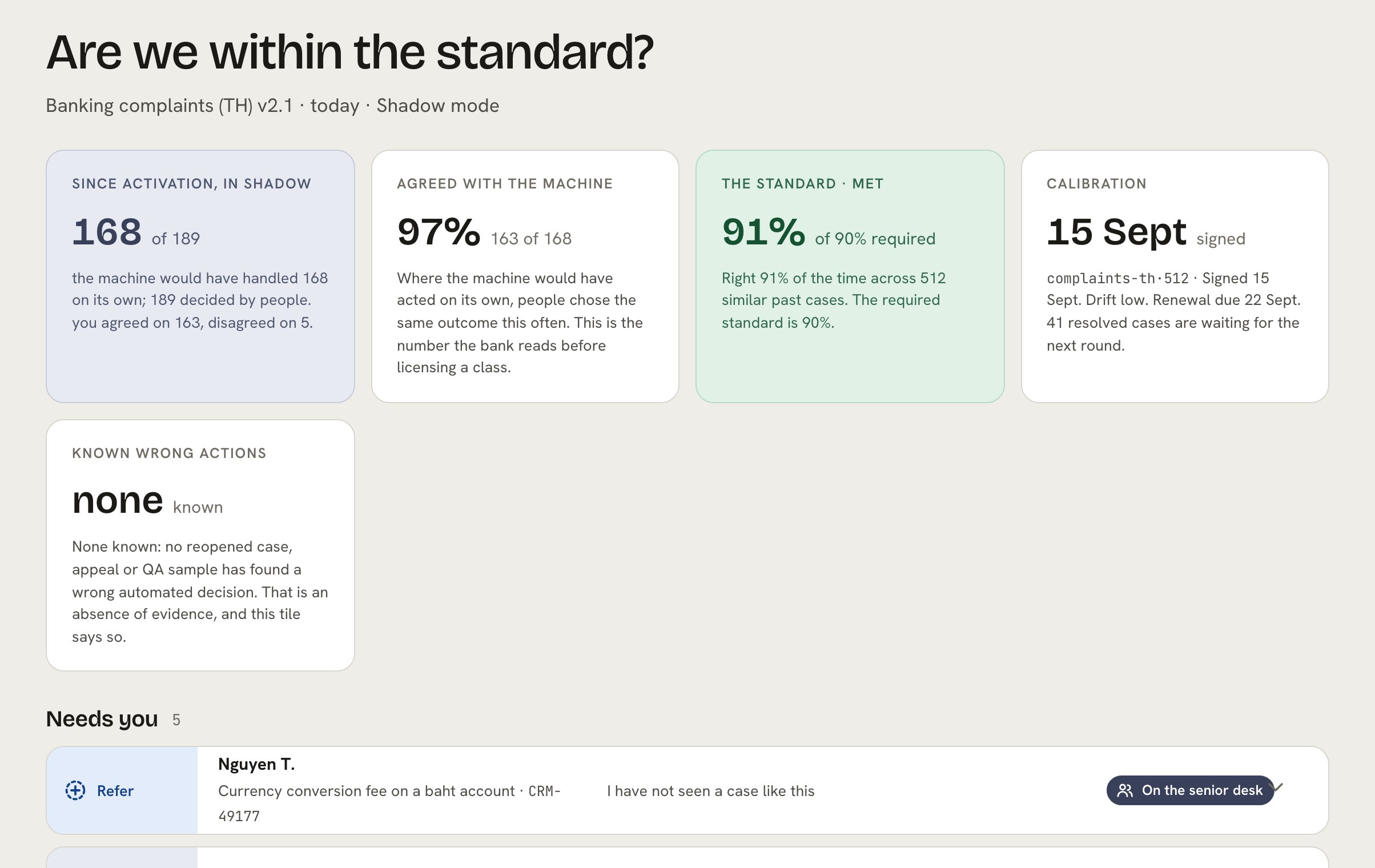
REMIT is installed inside your perimeter and switched on in shadow mode: it reads, scores and records every case, but nothing executes. Your people decide everything, exactly as today. After two weeks you read how often they agreed with the machine.
Trust noteThe pilot runs in shadow mode on your own servers with your own data: the system scores, gates and records every case and executes nothing. SG Systems has no remote access during the pilot; adaptation happens on a workstation inside your building.
What shadow mode is
Everything runs. Nothing acts.
It reads and scores every case.
Documents become case records; the model chooses from your outcomes; the gate decides whether it would have acted. All of it is recorded.
Your people decide every case.
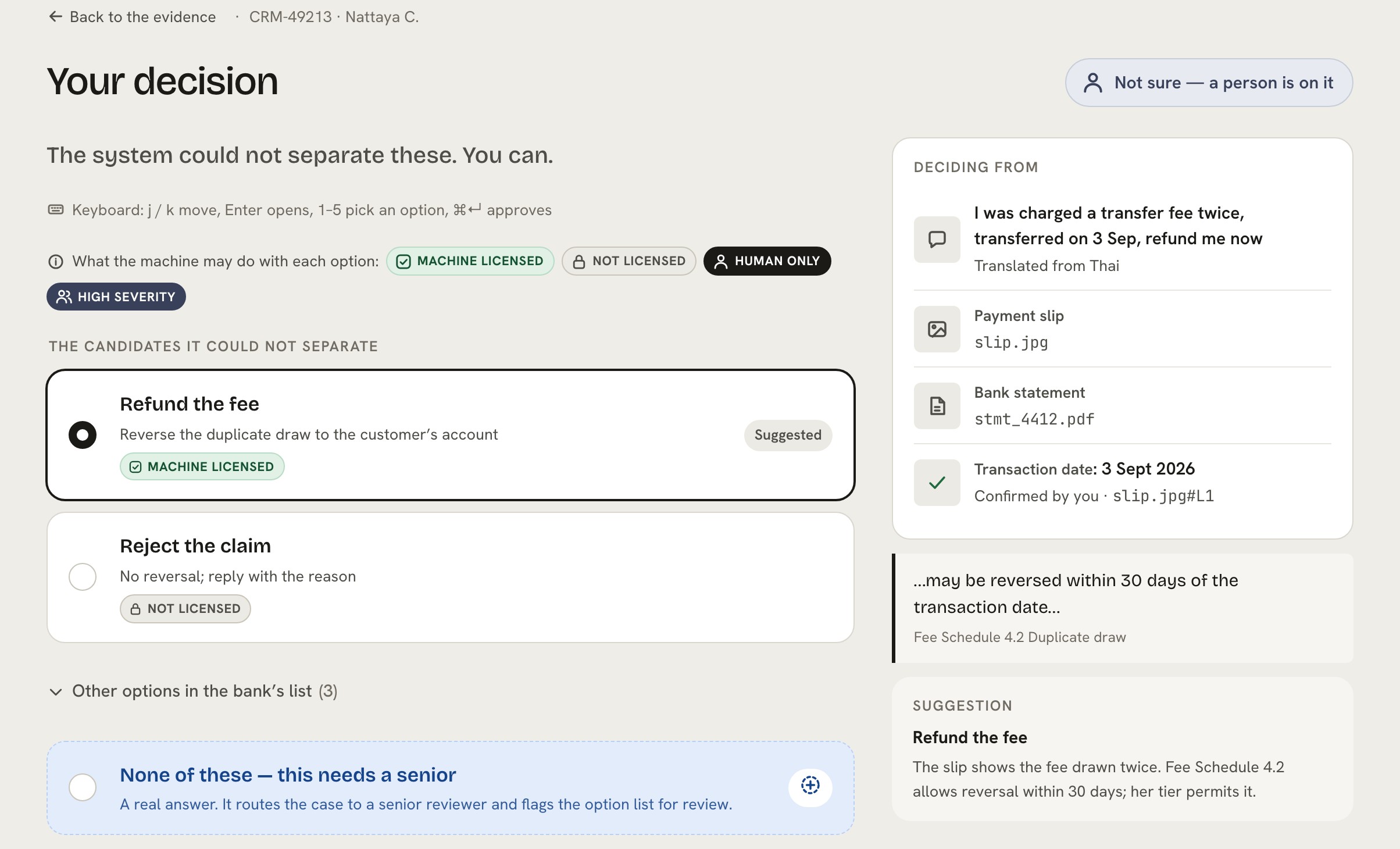
Nothing is executed, sent or written back. The reviewer sees what the machine would have done, next to the decision they make themselves.
Agreement is measured per outcome.
Each case logs whether the person agreed or disagreed with the machine. Both feed the next calibration round, and both are on the oversight screen.
You license outcomes one at a time.
After the readout, compliance licenses specific outcomes for the machine to act on, under dual control. Declines, filings and freezes stay human-only by construction.
The two weeks
Day by day
Before
Readiness
A short data-residency and model-risk check against your regime, and the outcome list agreed with your domain experts.
Week 1
Install and measure
REMIT on one server inside your perimeter. A few hundred of your past cases with outcomes set the standard; the number goes on the record before any live case is seen.
Week 2
Shadow on live cases
Every live case is read, scored, gated and recorded. Your reviewers work as usual; the console shows what the machine would have done.
Day 14
Readout
Agreement per outcome, the standard as measured, every case the machine would have handled and every one it declined. You decide what, if anything, to license.
What we need from you
Three things
- 1One server or virtual machine inside your perimeter, with no path to the internet
- 2A few hundred past cases with their outcomes, for the standard
- 3One reviewer team working as they do today, for two weeks
What you get at the end
A readout you can put in front of your risk committee
- Agreement between your people and the machine, per outcome
- The accuracy standard, measured on your own cases, with its date and drift
- Every case the machine would have handled, with its evidence
- Every case it declined, and why
- A signed proof record for each shadow decision
- A licensing proposal: which outcomes, under which controls, and which stay human-only
Shadow mode measures agreement between your reviewers and the machine on your live cases. It does not measure whether either was right; that is what the standard, measured on past cases with known outcomes, is for. Both numbers are in the readout, and neither is a promise about any single case.
For your infrastructure team
What your network, security, identity and model-risk teams run before go-live, every item sourced to the specification.
Deployment validation checklistStart in shadow mode.
The pilot is scoped in Discovery with design partners. The first paid step is the readiness check.